
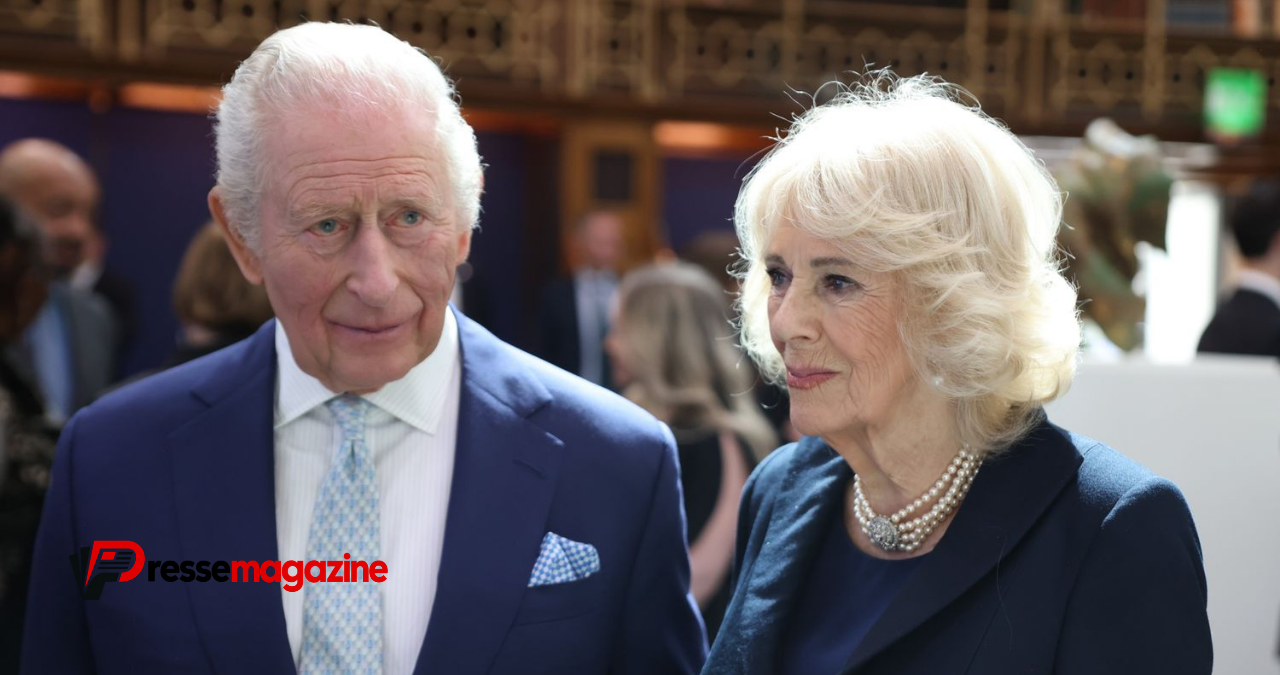
Who Is Queen Camilla?
Queen Camilla, born Camilla Rosemary Shand on 17 July 1947, is the wife of King Charles III and a senior member of the British Royal Family. She was born at King’s College Hospital in London to Major Bruce Middleton Hope Shand and the Hon Rosalind Maud Shand, and spent much of her childhood in East Sussex. Her education included schools in Sussex and London, time in Switzerland, and study at the Institut Britannique in Paris. Before becoming Queen, she was widely known as the Duchess of Cornwall and developed a substantial programme of charitable and public work.
Queen Camilla became Queen Consort when Charles III succeeded Queen Elizabeth II in September 2022. Her role has since developed into a busy schedule of official engagements, charity visits, cultural events and public appearances across the United Kingdom and overseas. She also supports the King in his constitutional and ceremonial responsibilities while maintaining her own areas of interest. The official Royal Family website continues to document her engagements, including appearances during 2026 at cultural and community events.
Queen Camilla’s Early Life and Education
Camilla grew up in a family with longstanding connections to East Sussex, where her parents established their home in 1951. Her father, Major Bruce Shand, had a distinguished military background and later served as Vice Lord-Lieutenant of East Sussex. Her mother, Rosalind, was the daughter of the 3rd Baron Ashcombe. Camilla was educated initially at Dumbrells School in Sussex before attending Queen’s Gate School in South Kensington. She later studied at Mon Fertile in Switzerland and the Institut Britannique in Paris.
Her family background also influenced some of the causes that later became central to her public work. Camilla has a sister, Annabel Elliot, and a brother, Mark Shand, who became a conservationist. Her interest in osteoporosis awareness has a particularly personal family connection, as her mother and grandmother both died after experiencing the condition. Camilla began supporting the Royal Osteoporosis Society in 1994 and became its President in 2001, making health awareness one of the longest-running themes of her charitable activities.
Queen Camilla and King Charles III
The relationship between Queen Camilla and King Charles III has been an important part of their public biographies for decades. Charles and Camilla married on 9 April 2005 in a civil ceremony at the Guildhall in Windsor. Around 800 guests subsequently attended a Service of Prayer and Dedication at St George’s Chapel, Windsor Castle, followed by a reception hosted by Queen Elizabeth II. Their marriage began a new chapter in Camilla’s public life as she became the Duchess of Cornwall.
As Duchess of Cornwall, Camilla gradually established her own identity through charitable patronages and public engagements. Rather than simply appearing alongside Charles, she developed interests covering literacy, health, animal welfare, the arts and support for people affected by abuse and domestic violence. Over the years, this work created a substantial portfolio that continued to expand after Charles became King. Her experience before the accession therefore provided an important foundation for the responsibilities she carries as Queen.
Queen Camilla’s Coronation and Royal Duties
The accession of King Charles III in 2022 transformed Camilla’s official position within the monarchy. She became Queen Consort and subsequently took part in the historic coronation ceremony at Westminster Abbey on 6 May 2023. The occasion formally marked a new reign and placed Camilla at the centre of one of Britain’s most traditional constitutional ceremonies. Her position combines ceremonial responsibilities with practical public duties, allowing her to represent the monarchy at events and support organisations connected with her interests.
Queen Camilla continues to undertake engagements independently as well as appearing alongside King Charles. Her official programme can include visits to charities, meetings with community groups, cultural events and national occasions. Recent Royal Family records show her continuing this work during 2026, including an appearance at Letters Live at the Royal Festival Hall and an event involving Maggie’s. These engagements demonstrate the continuing breadth of her public schedule and her involvement with organisations beyond formal royal ceremonies.
Queen Camilla’s Charitable Work
Charity work is one of the most significant parts of Queen Camilla’s public role. According to the official Royal Family biography, she has become Patron or President of more than 100 charities since her marriage to Charles in 2005. Her interests span health and wellbeing, literacy, the arts, animal welfare, support for older people and assistance for survivors of rape, sexual assault and domestic violence. This broad portfolio has allowed her to highlight organisations working on issues affecting communities throughout Britain.
Her patronages have also changed as the Royal Family has evolved. In 2016, Queen Elizabeth II transferred a number of patronages to other members of the family, and Camilla took on roles connected with organisations including Barnardo’s, Battersea Dogs & Cats Home and the Royal School of Needlework. She also became associated with the Royal Society of Literature in 2018. Following the change of reign, the Royal Household began reviewing royal patronages, making the structure of these relationships an evolving part of the modern monarchy.
Queen Camilla and Literature
Literature has become another distinctive feature of Queen Camilla’s public identity. Her support for reading and books has developed into a sustained area of activity, complementing her wider charitable responsibilities. Through literary events and organisations, she has encouraged people to discover authors, discuss books and recognise the wider cultural value of reading. This interest gives her public programme a strong connection with education and culture while also providing opportunities to meet writers, readers and organisations involved in the literary world.
The Queen’s interest in literature sits alongside her support for literacy more broadly. Her charitable work has repeatedly included initiatives intended to encourage reading and improve access to books and educational opportunities. This has helped establish literature as more than a personal hobby within her public role. Instead, it has become a platform through which she can support cultural organisations and promote the benefits of reading to different generations across the United Kingdom.
Queen Camilla’s Family Life
Queen Camilla has two children from her previous marriage to Brigadier Andrew Parker Bowles. Thomas Henry Parker Bowles was born in 1974, while Laura Rose was born in 1978. Her first marriage was dissolved in 1995, ten years before her marriage to Charles. Camilla’s family has therefore remained distinct from the direct line of succession, although her children and grandchildren naturally form part of the wider family surrounding the King and Queen.
Camilla is also a grandmother and step-grandmother, with the Royal Family recording five grandchildren and five step-grandchildren. Her brother Mark Shand was a conservationist whose work with Asian elephants became an important part of his legacy. Camilla later supported Elephant Family, connecting her family’s conservation interests with her own public responsibilities. These family connections illustrate how several of the causes associated with Queen Camilla have developed through personal experiences as well as formal royal duties.
Queen Camilla’s Role in the Modern Monarchy
The role of Queen Camilla reflects the changing nature of the British monarchy. She supports King Charles III while also maintaining an extensive independent programme of engagements. Her activities range from cultural and literary events to health initiatives, community visits and charity work. This combination means that her public responsibilities are not limited to major royal occasions, with much of her work taking place through regular meetings with charities, campaigners, professionals and members of the public.
Her position has also developed over many years rather than appearing suddenly with the accession of Charles. As Duchess of Cornwall, Camilla built experience through hundreds of engagements and a broad collection of patronages. That background gave her a substantial foundation when she became Queen. Today, her work continues to form part of the wider programme of the Royal Family, with official engagements recorded regularly by the Royal Household.
Queen Camilla’s Public Profile Today
Queen Camilla remains an active member of the Royal Family, with her official calendar covering a wide range of subjects. In 2026, the Royal Family has documented her participation in cultural events, charitable conversations and major national occasions. Her appearance at Letters Live at the Royal Festival Hall in September 2026 is one recent example of her continuing interest in literature and culture. She has also appeared with King Charles at significant public events, reinforcing her role as his partner in royal duties.
Her public profile is consequently shaped by several overlapping roles: Queen, wife, mother, grandmother, charity patron and supporter of literature and the arts. Each part contributes to the way she is seen within the contemporary monarchy. While ceremonial occasions naturally attract the greatest attention, much of her work takes place through less formal meetings and visits. These engagements allow Queen Camilla to maintain long-term relationships with organisations and bring public attention to causes represented by her patronages.
Conclusion
Queen Camilla’s life story stretches from her childhood in East Sussex to her position at the heart of the British monarchy. Her marriage to King Charles III in 2005 brought her into a highly visible royal role, while the King’s accession in 2022 made her Queen. Since then, she has continued a wide programme of official engagements while supporting causes connected with health, literacy, literature, animal welfare and the arts. Her public career has therefore developed through many years of service rather than being defined solely by her royal title.
Today, Queen Camilla remains an important working member of the Royal Family, supporting the King and maintaining her own charitable responsibilities. Her biography includes family history, royal milestones, literary interests and long-standing relationships with organisations across Britain. Official Royal Family records show that her schedule continues to include cultural and community engagements in 2026. For anyone researching Queen Camilla, these different aspects provide a useful picture of her background, responsibilities and continuing place within the modern British monarchy.
FAQs
When was Queen Camilla born?
Queen Camilla was born Camilla Rosemary Shand on 17 July 1947 at King’s College Hospital in London. She is the daughter of Major Bruce Middleton Hope Shand and the Hon Rosalind Maud Shand. Her childhood was largely connected with East Sussex, and she later studied in Switzerland and Paris.
When did Queen Camilla marry King Charles III?
Queen Camilla married Charles, then the Prince of Wales, on 9 April 2005. Their civil ceremony took place at the Guildhall in Windsor, followed by a Service of Prayer and Dedication at St George’s Chapel, Windsor Castle. The ceremony marked the beginning of her long-term role within the senior Royal Family.
Does Queen Camilla have children?
Yes. Queen Camilla has two children from her previous marriage to Andrew Parker Bowles. Her children are Thomas Henry Parker Bowles, born in 1974, and Laura Rose, born in 1978. She also has grandchildren and step-grandchildren as part of her wider family.
What charities does Queen Camilla support?
Queen Camilla supports more than 100 charities as Patron or President, with interests covering health, literacy, the arts, animal welfare and support for people affected by sexual and domestic violence. Her charitable portfolio has developed over several decades and remains a major part of her official work.
What is Queen Camilla’s role?
Queen Camilla supports King Charles III in his work and duties while undertaking her own programme of public engagements. Her official responsibilities include representing the Royal Family at events and supporting charities and organisations connected with her patronages. Her schedule continues to include cultural, community and charitable activities across the United Kingdom.
You may also read
mhari aurora






One Comment