
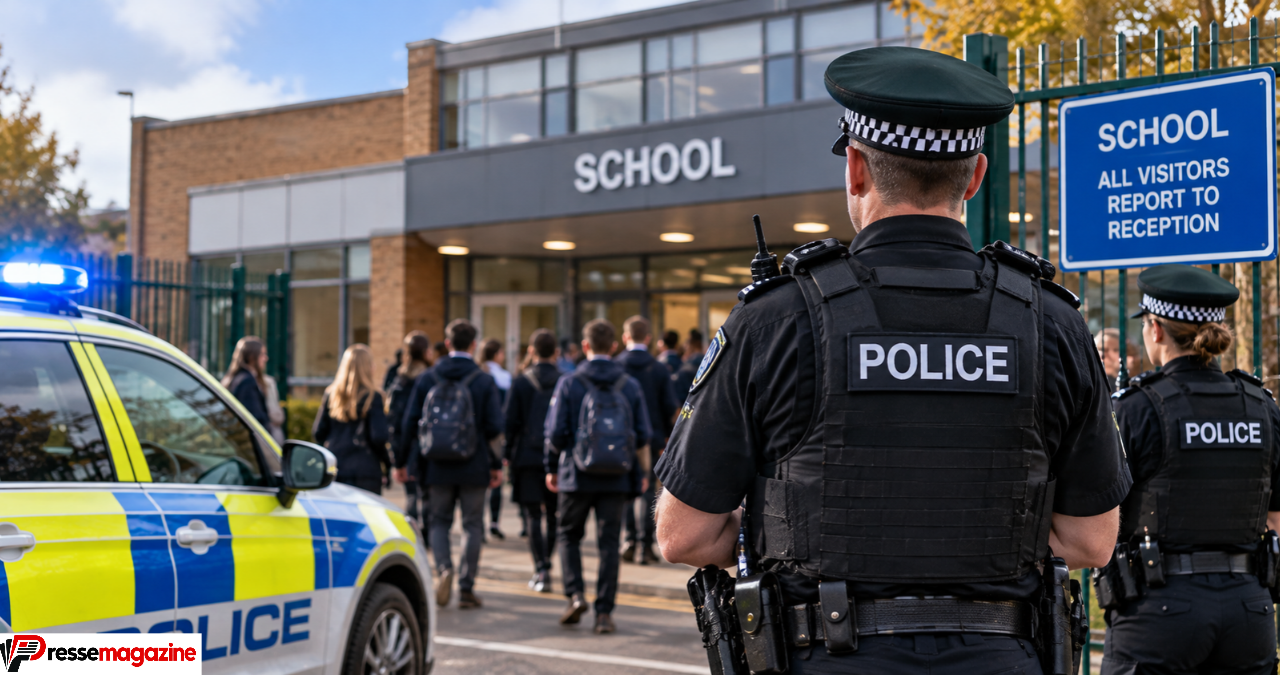
What Happened in the UK School Bomb Threat Incident?
On Monday, 19 October 2026, Hoax bomb threat schools across Northern Ireland received threatening emails claiming that explosive devices were present in educational buildings. The Police Service of Northern Ireland (PSNI) confirmed that up to 300 schools had reported receiving the same generalised message. Similar threatening communications were also reported at schools elsewhere in the United Kingdom, including Scotland. Police assessed the emails as a hoax after initial checks found nothing suspicious, although enquiries continued. The incident caused concern among parents, pupils and school staff, while some schools temporarily closed or took precautionary action following the warnings.
What Did Police Say About the Hoax Bomb Threat Schools Incident?
The PSNI stated on 19 October that the threatening emails originated from outside the UK and that the risk to the public was considered low based on the information available at that time. Officers continued investigating the circumstances surrounding the messages and worked with the Department of Education and the Education Authority in Northern Ireland. Police emphasised that incidents of this nature are taken seriously because they can cause considerable anxiety and Hoax bomb threat schools disruption. Their assessment that the messages were a hoax reflected the findings available at that stage; it did not mean that the investigation had been completed or that the sender had been identified.
How Many Schools Received the Threatening Emails?
According to the PSNI, up to 300 Hoax bomb threat schools in Northern Ireland had reported receiving the same threatening email by the time of its statement on 19 October 2026. Northern Ireland’s Education Authority also reported that more than 300 schools were believed to have received the messages. The precise number of affected establishments and the extent of the incident outside Northern Ireland were not fully established in the initial statements. Authorities believed similar emails had reached other parts of the UK. It is therefore important to distinguish the confirmed Northern Ireland reports from wider estimates rather than presenting every school as having been affected.
Did Schools Close After Receiving the Threats?
Some schools took precautionary action after receiving the emails, including temporary closures and evacuations where considered necessary. Northern Ireland’s Education Minister, Paul Givan, acknowledged the disruption and distress experienced by pupils, parents and staff. However, the Education Authority confirmed that the majority of schools in Northern Ireland remained open despite the threatening communications. Arrangements varied according to local circumstances and advice from the police. Families were encouraged to follow official communications from their children’s schools rather than rely on social media speculation. The incident demonstrated why school leaders must assess threatening messages carefully and prioritise the safety of pupils and staff.
What Was the Police Investigation Focused On?
The PSNI confirmed that enquiries into the threatening emails were continuing after initial checks failed to identify anything suspicious. Police also stated that the email originated outside the United Kingdom, although this information alone did not establish the identity of the person responsible. Investigators would need to assess available evidence before reaching conclusions about the Hoax bomb threat schools sender or motive. Authorities worked with education officials to provide reassurance and coordinate their response. Readers should avoid assuming that an individual, organisation or community was responsible without verified evidence. The confirmed position was that police were treating the emails as a hoax while continuing their investigation.
How Did the Incident Affect Pupils and Parents?
The threatening emails caused understandable concern across school communities, even though police were treating them as a hoax. Parents wanted reassurance that their children were safe, while teachers and school leaders had to respond to official advice and manage possible disruption to lessons. Temporary closures or evacuations can affect transport, childcare and family working arrangements. Pupils may also feel unsettled when they hear alarming reports about their school. Clear communication is therefore essential during an incident of this kind. Families should use official school messages and police updates to understand what is happening, avoiding unverified claims that may increase anxiety unnecessarily.
What Should Parents Do During a School Bomb Threat?
Parents should remain calm and follow instructions issued by their child’s school and the relevant emergency services. They should avoid travelling to school during an active emergency unless they are instructed to do so, as unexpected arrivals may interfere with safety arrangements. If a school announces a closure or a change to collection procedures, families should follow the stated instructions. Parents should also avoid sharing threatening messages or unconfirmed reports through social media and messaging groups. If children feel worried, adults can offer simple, age-appropriate reassurance and explain that trained professionals are assessing the situation. Official updates should take priority over rumours.
What Should Schools Do When They Receive a Threat?
Schools should follow their established emergency procedures and contact the police when a bomb threat is received. Staff should preserve the original message and provide relevant details to investigators rather than attempting to determine independently whether the threat is genuine. Depending on police advice and the circumstances, protective action may Hoax bomb threat schools include restricting access, evacuating an area or temporarily closing the premises. School leaders should communicate clearly with staff and parents while protecting sensitive information. Regular training and clear responsibilities can help schools respond consistently. Government guidance on protective security and preparedness for educational settings provides further information for schools in England, while other UK nations have their own relevant arrangements.
Can Someone Face Legal Consequences for a Hoax Bomb Threat?
Making a false bomb threat can lead to a criminal investigation and potential prosecution in the UK. The applicable offence and possible consequences depend on the facts, the communication involved and the relevant law. Describing a threat as a joke does not automatically make it harmless, because false warnings can frighten families, interrupt education and divert emergency resources. Police may examine available digital and other evidence to establish who was responsible. However, responsibility should not be attributed to anyone without sufficient evidence. Anyone facing a criminal allegation should seek advice from a qualified solicitor and allow the legal process to determine the facts.
Conclusion
The hoax bomb threat schools incident reported on 19 October 2026 caused concern and disruption across Northern Ireland and raised similar concerns in Scotland. Police treated the emails as a hoax after initial checks found nothing suspicious, while investigations continued into their origin. Although the immediate risk was assessed as low, the incident highlighted the importance of responsible reporting, effective emergency procedures and clear communication with families. Parents should follow official instructions, schools should act on police advice, and readers should avoid spreading unverified claims. Accurate information helps communities respond calmly while authorities continue their enquiries.
FAQs
What is a Hoax bomb threat schools?
A Hoax bomb threat schools or apparently non-credible warning claiming that an explosive device is present or that an explosion may occur. Schools must still report the communication and follow the appropriate safety procedures. Police assess the available information and advise on the response. Even when a threat is treated as a hoax, it can cause fear, disrupt lessons and require significant work from school staff and emergency services.
What happened on 19 October 2026?
The PSNI reported that up to 300 schools in Northern Ireland had received the same threatening email. Police were treating the messages as a hoax after initial checks found nothing suspicious. Similar emails were believed to have reached schools elsewhere in the UK, and some schools took precautionary action. Investigations were continuing when the initial statements were published.
Were all schools in Northern Ireland closed?
No. The Education Authority stated that the majority of schools remained open, although some disruption occurred. Individual schools made decisions based on their circumstances and the advice available to them. Parents should check official school communications for specific opening arrangements rather than assume that every school was closed.
What should parents do if they receive a school threat alert?
Parents should follow verified instructions from the school and police, avoid spreading rumours and wait for official guidance about collection arrangements. They should not investigate suspicious objects or interfere with emergency services. If they receive a threatening message directly, they should report it to the appropriate authorities.
Where can readers find reliable updates?
Readers can check statements from the Police Service of Northern Ireland, the Education Authority Northern Ireland, the Department of Education in Northern Ireland and Police Scotland for relevant updates. Reputable news organisations can provide additional context, but official statements are the best source for confirmed police assessments and school instructions.
You may also read
Peter Andre Children