
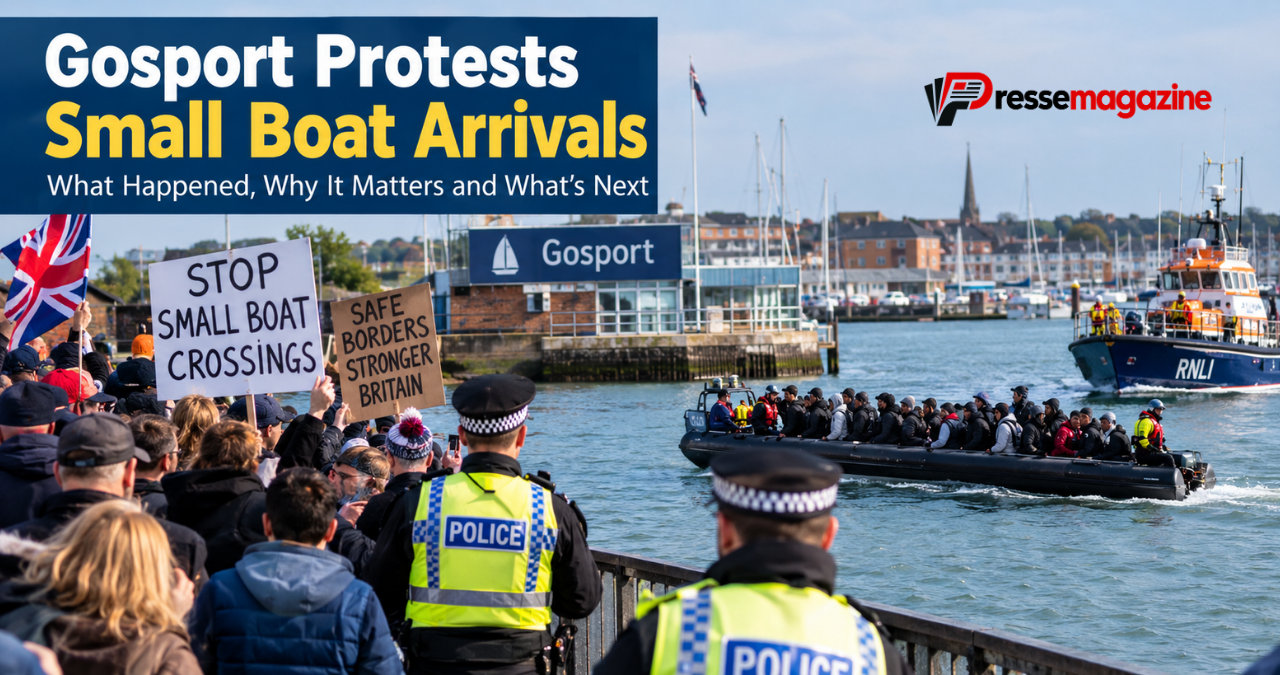
Gosport Protests Small Boat Arrivals Explained
The phrase Gosport protests small boat arrivals has become increasingly associated with demonstrations, policing and the wider debate surrounding Channel crossings in the United Kingdom. Gosport, a coastal town in Hampshire, attracted attention when reports of migrant boats approaching the south coast prompted public gatherings and a visible police presence. The issue brought together several complicated subjects, including border security, asylum policy, maritime rescue operations and the legal right to protest. For local residents, the events also demonstrated how quickly national immigration debates can become highly visible within a local community.
The situation has attracted interest because small boat arrivals are not simply an immigration story. They can involve the RNLI, police forces, maritime authorities, immigration officials and local councils, particularly when vessels arrive unexpectedly or require emergency assistance. In Gosport, the possibility and eventual arrival of people travelling across the Channel created a tense atmosphere around the waterfront. Protesters expressed strong views about immigration and border control, while authorities focused on maintaining public order and ensuring that people arriving by sea could be dealt with safely and lawfully.
Why Did Gosport Become a Focus of Protests?
Gosport became a focus of attention because of reports that a small migrant boat could reach the Hampshire coastline. News of a potential arrival quickly encouraged protesters to gather, reflecting the sensitivity surrounding irregular migration across the English Channel. For some demonstrators, the issue represented concerns about Britain’s borders and the Government’s immigration policies. Others viewed the situation primarily through a humanitarian lens, particularly because people attempting the crossing can face dangerous conditions. The competing perspectives helped turn an individual maritime incident into a much wider local and national discussion.
The location of Gosport also made the situation particularly noticeable. The town sits opposite Portsmouth and has important maritime connections, including harbour facilities and access to the Solent. When a vessel is expected, emergency services may need to prepare for several possible outcomes rather than assume exactly where it will land. This uncertainty can contribute to public speculation and rapid developments. As a result, reports about small boat arrivals can generate a police presence even before officials know the precise destination of the vessel or the number of people involved.
What Happened During the Gosport Protests?
Earlier protests in Gosport followed reports concerning a small boat crossing the Channel and the possibility that people could be brought ashore locally. Police attended the area to manage the situation, protect the public and facilitate lawful demonstrations. Although peaceful protest is protected under UK law, officers also have responsibilities when behaviour potentially threatens public safety or involves offences. The events resulted in arrests after incidents involving alleged offences including assaulting emergency workers, aggravated trespass and careless driving, highlighting the challenges faced by police during emotionally charged demonstrations.
The September events also showed how quickly circumstances can change during a Channel crossing. The boat that had prompted concern did not ultimately land in Gosport, yet the gathering continued and police resources remained necessary. This distinction is important when understanding reports about the Gosport protests small boat arrivals issue. A reported possible landing does not automatically mean that a vessel will arrive at that location. Maritime conditions, rescue decisions and operational arrangements can change the final destination while authorities continue preparing for different possibilities.
What Happened With the October Small Boat Arrival?
The situation developed further in October when another small boat crossed the Channel and became the focus of renewed attention in Gosport. Reports stated that the vessel entered British waters before RNLI vessels became involved and that people aboard were eventually brought ashore at Haslar Marina. The arrival created another gathering of protesters and led to a significant police presence around the waterfront. The incident placed Gosport directly at the centre of national coverage about Channel crossings and prompted renewed debate over Britain’s response to irregular migration.
Reports about the number of people aboard the vessel changed as authorities established the details of the incident. Initial reports indicated approximately 120 people, while later reporting put the figure at 149 migrants. Such differences can occur during rapidly developing maritime operations, particularly before officials complete formal checks. Once people arrive in the UK, however, the situation moves beyond the rescue stage and into immigration and safeguarding procedures. This can include identity checks, health assessments, biometric processing and consideration of individual circumstances under the UK’s immigration system.
How Did Police Respond to the Protests?
Police played a central role during the Gosport demonstrations because officers had to balance several responsibilities at the same time. They needed to facilitate lawful protest while protecting members of the public, emergency workers and other individuals in the area. Officers also had to support partner agencies dealing with the maritime operation. Where alleged offences occurred, police were required to investigate and, where appropriate, make arrests. This combination of responsibilities explains why a large police presence can be seen around a demonstration even when authorities are committed to protecting the right to peaceful protest.
The arrests connected with earlier Gosport demonstrations also underlined the difference between peaceful political expression and criminal behaviour. People in Britain have important rights to express opposition to Government policy and participate in demonstrations, but those rights do not provide immunity from criminal law. Police can intervene when behaviour crosses legal boundaries. In a situation involving a sensitive subject such as migration, maintaining this distinction becomes particularly important because emotions can run high. Effective policing therefore involves protecting lawful speech while responding proportionately to genuine threats, disorder or alleged offences.
Why Are Small Boat Arrivals Such a Major Issue in Britain?
Small boat arrivals have become one of the most controversial subjects in British politics because they combine immigration, border control, national security and humanitarian concerns. Thousands of people have attempted to cross the English Channel in small vessels, many of which are unsuitable for long journeys in busy and unpredictable waters. The crossings can therefore create significant risks to passengers and require coordinated rescue operations. At the same time, the Government faces pressure to reduce irregular migration and disrupt criminal smuggling networks responsible for organising dangerous journeys.
The debate is often divided between people who prioritise stronger border enforcement and those who emphasise humanitarian responsibilities towards people seeking protection. Neither perspective fully captures the complexity of individual cases, because people arriving on small boats can have very different backgrounds and legal circumstances. Some may seek asylum, while others may have different immigration situations. The legal process is designed to assess those circumstances individually. Consequently, the arrival of a boat should not be treated as the final outcome of an immigration case, because processing and legal decisions occur afterwards.
What Happens to Migrants After Reaching Gosport?
People brought ashore following a Channel crossing can be subject to official procedures before their immigration situation is determined. Authorities may record personal details, conduct biometric checks and assess health or safeguarding needs. Depending on individual circumstances, people can then enter the asylum or immigration process. This means that arriving at a marina such as Haslar is only one stage of a much longer process. The Government, immigration authorities and other agencies have different responsibilities once people are safely ashore and no longer part of the immediate maritime rescue operation.
It is also important to distinguish between rescue and immigration enforcement. RNLI crews are primarily concerned with saving lives and responding to maritime emergencies, rather than deciding who should remain in Britain. Immigration decisions are handled by the relevant government authorities after people have been brought to safety. This separation of responsibilities is important when discussing small boat arrivals because emergency crews may assist people regardless of their immigration status. The immediate priority at sea is preventing loss of life, while questions about asylum, removal or immigration status are dealt with through separate legal and administrative procedures.
How Does Gosport Compare With Other Coastal Protests?
Gosport is not the only coastal community where small boat arrivals have generated demonstrations or political debate. Towns and cities across southern England have experienced protests, counter-protests and increased police activity connected with migration. Dover, Portsmouth and other areas have become particularly familiar with the issue because of their proximity to Channel crossing routes. However, each location has its own circumstances. The size of a demonstration, the number of people arriving, the behaviour of protesters and the response of emergency agencies can vary significantly from one incident to another.
The wider pattern demonstrates why small boat arrivals remain politically sensitive throughout the United Kingdom. A single crossing can attract national media attention, while images of protesters, police officers and migrants can spread rapidly online. Social media can also create confusion when early reports are incomplete or inaccurate. For that reason, official statements from police, maritime authorities and government agencies are important when establishing what actually happened. Reliable information helps separate confirmed developments from speculation and prevents individual incidents from being presented without the necessary context.
What Does the Gosport Situation Mean for Local Residents?
For people living in Gosport, the protests have brought a national political debate directly into their local surroundings. Residents may have concerns about public safety, pressure on services, disruption caused by demonstrations or the broader impact of immigration policy. Others may support humanitarian assistance or disagree strongly with anti-migrant demonstrations. These different views can exist within the same community. The challenge for local authorities is to maintain public order and ensure that everyone can go about their daily lives while lawful political expression remains protected.
The situation also demonstrates the importance of coordinated emergency planning in coastal communities. When a small boat is reported near the British coast, authorities cannot always predict precisely where it will go. Weather conditions, maritime safety considerations, rescue decisions and operational requirements can influence what happens next. Gosport’s experience shows that preparation can be necessary even when a landing remains uncertain. For residents, the most useful information therefore comes from verified updates rather than social media speculation, particularly during rapidly changing incidents involving boats, protests and emergency services.
What Is the Wider Future of Small Boat Arrivals?
The future of small boat arrivals will depend on several factors, including cooperation between Britain and France, enforcement against smuggling gangs, conditions in countries of origin and the Government’s immigration policies. Authorities have continued to pursue measures intended to reduce crossings and increase enforcement, while critics argue that further action is necessary. The situation remains difficult because the Channel is a heavily used international waterway and smugglers can adapt their methods. Even when overall crossing numbers change, individual arrivals can continue to create significant political and humanitarian attention.
For Gosport, future developments may depend partly on whether authorities continue using local maritime facilities during particular operations. The town’s location means that it can become involved when vessels approach the Hampshire coast, although this does not mean every Channel crossing will result in a Gosport arrival. Public reaction is also likely to remain important. As long as small boat crossings remain a prominent national issue, communities such as Gosport may continue to experience demonstrations, political debate and heightened media interest whenever an arrival takes place nearby.
Conclusion
The Gosport protests small boat arrivals story illustrates how a maritime incident can quickly become a major community and political issue. Protests in the town have reflected strong feelings about immigration and border control, while police and emergency services have had to manage public safety alongside complex maritime operations. The arrival of a small boat also triggers a separate immigration process, meaning rescue, policing and asylum decisions involve different authorities. Understanding these distinctions is essential when assessing reports about Gosport and avoiding confusion caused by incomplete or rapidly changing information.
For residents and readers following the story, reliable information remains particularly important. Small boat crossings can develop quickly, and early reports about passenger numbers, destinations or official actions may change as authorities establish the facts. Gosport’s experience highlights the continuing national debate over irregular migration while also showing the practical challenges faced by coastal communities. As the UK continues working with international partners to address Channel crossings and people-smuggling networks, Gosport and other southern coastal areas are likely to remain closely watched whenever new arrivals occur.
FAQs
Why were people protesting in Gosport?
People gathered in Gosport because of concerns surrounding small boat crossings and the possibility that migrants could arrive on the Hampshire coast. Protesters have expressed views about immigration, border control and Government policy. Police were present to manage demonstrations and respond to any incidents requiring intervention. The exact circumstances have differed between individual protests, so claims about an expected landing should always be checked against official information. A vessel being monitored near the south coast does not necessarily mean that Gosport will be its final destination.
Did migrants arrive in Gosport?
Yes, reports in October stated that a small boat carrying migrants was brought ashore at Haslar Marina in Gosport following a Channel crossing. Earlier concerns in September did not result in the reported vessel landing there. This difference demonstrates why information about these incidents can change quickly. Maritime authorities and rescue organisations must respond to circumstances at sea, while immigration authorities take responsibility for processing people after they reach safety. The final location of an arrival can therefore differ from initial expectations.
How did police handle the Gosport protests?
Police attended the demonstrations to protect the public, support emergency operations and facilitate peaceful protest. During earlier events, several people were arrested following incidents involving alleged criminal offences. Police have stressed the importance of maintaining public safety while respecting the legal right to demonstrate. The response can involve officers monitoring crowds, managing movement around sensitive locations and investigating alleged offences. The exact policing operation depends on the circumstances, the size of the gathering and any risks identified by authorities.
Why are small boats crossing the English Channel?
People cross the English Channel in small boats for a variety of reasons, and individual circumstances differ considerably. Some people may be seeking asylum or international protection, while others may have different immigration motivations. Smuggling networks facilitate many journeys, often using overcrowded and unsafe vessels. The crossings are dangerous because the Channel has strong currents, busy shipping routes and unpredictable weather. British and French authorities therefore treat many incidents as both immigration matters and maritime safety situations requiring rapid coordination between different agencies.
What is likely to happen next in Gosport?
Future developments will depend on whether additional small boats approach the Hampshire coastline and how authorities respond to them. Gosport may continue to attract demonstrations whenever reports suggest that migrants could be brought ashore locally. Police and partner agencies are likely to maintain contingency plans for maritime incidents, while immigration authorities will handle any people who arrive through established procedures. The wider political debate is also likely to continue because Channel crossings remain a major subject in British discussions about borders, asylum and immigration policy.
You may also read
ryan coogan










One Comment