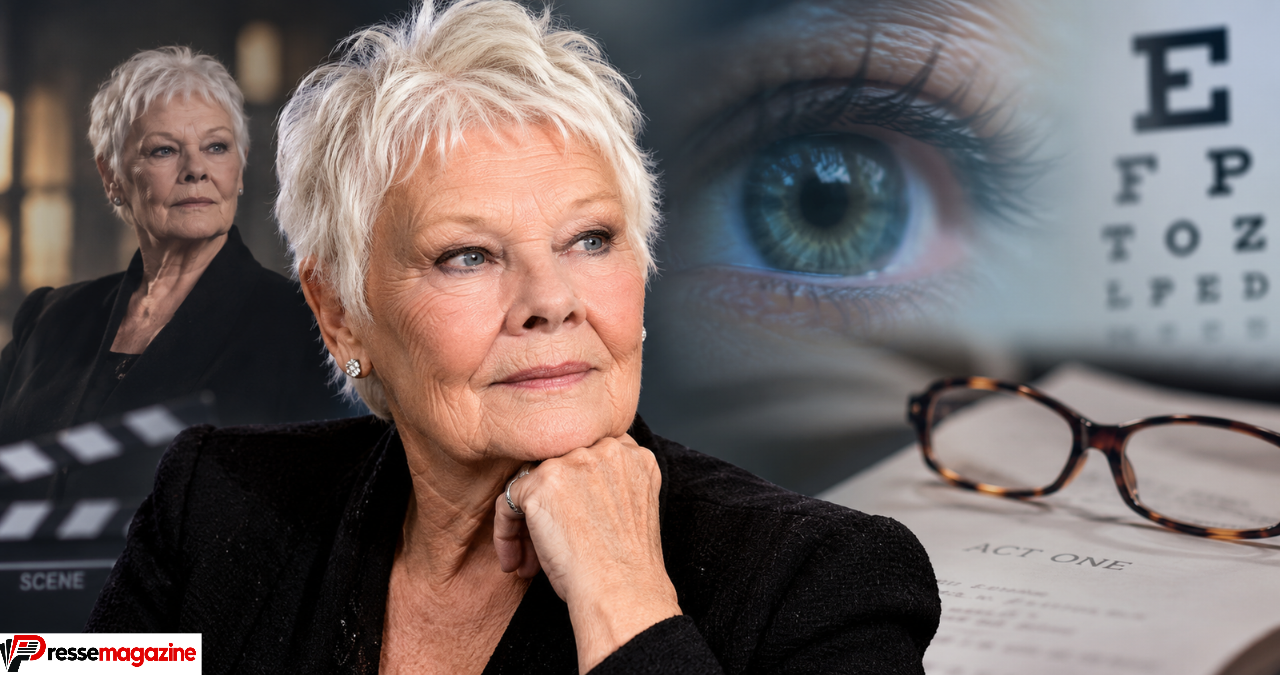
The story of dame judi dench vision loss has attracted considerable attention across the United Kingdom, highlighting the challenges faced by one of Britain’s most respected actresses. Known for her remarkable performances in theatre, television and cinema, Dame Judi Dench has spoken openly about living with a progressive eye condition that affects her independence and professional life. Her experiences have encouraged important conversations about sight loss, ageing and accessibility, particularly among older adults who may experience similar difficulties. Although her eyesight has deteriorated significantly, her determination, humour and enduring love of acting continue to make her an inspirational figure within British entertainment.
What Is Causing Dame Judi Dench Vision Loss?
Dame Judi Dench has been diagnosed with age-related macular degeneration, commonly known as AMD, a condition affecting the macula, the central part of the retina responsible for detailed vision. This area of the eye helps people recognise faces, read printed material and perform everyday activities requiring sharp eyesight. As the condition progresses, central vision may become blurred, distorted or increasingly difficult to use, creating substantial challenges for individuals who depend on visual accuracy. Although AMD can seriously affect independence and quality of life, it does not usually cause complete blindness because peripheral vision often remains available, depending on the individual’s circumstances.
The actress publicly discussed her diagnosis in 2012, explaining that her eyesight had begun affecting ordinary activities and professional responsibilities. Over subsequent years, she has described increasing difficulties with reading scripts, recognising people and managing situations that previously required little effort. Age-related macular degeneration is particularly relevant to older adults, although its progression and severity vary considerably between individuals. There are two principal forms, dry AMD and wet AMD, which differ in their underlying changes and available treatments. Public reports about Dench’s condition should not be interpreted as a complete medical assessment, and only her healthcare professionals can determine her precise clinical circumstances.
How Dame Judi Dench Vision Loss Has Affected Her Acting Career
For an actress whose career spans more than seven decades, deteriorating eyesight presents significant professional obstacles. Dame Judi Dench has explained that reading scripts and navigating film sets have become increasingly difficult, particularly because she previously relied on a strong photographic memory when learning dialogue. Friends and colleagues have helped by reading scripts aloud, allowing her to memorise lines through listening rather than reading. Nevertheless, the demands of filming, including movement, positioning and recognising visual cues, have become harder to manage. Her experience demonstrates how a disability can affect even highly experienced performers whose artistic knowledge and abilities remain considerable.
In interviews during 2025, Dench acknowledged that her worsening vision had severely restricted her ability to undertake acting roles. Her distinguished career includes playing M in the James Bond franchise, appearing in Shakespeare in Love and delivering acclaimed Shakespearean performances. Although her eyesight has limited traditional acting opportunities, her contribution to British entertainment extends beyond appearing on screen or performing on stage. Her achievements, public conversations and creative legacy continue to attract admiration from audiences across generations. Her circumstances also highlight the importance of accessible working practices for performers experiencing sight loss and other age-related disabilities.
Dame Judi Dench Vision Loss: Latest Health Updates
Recent developments have provided further insight into the seriousness of Dame Judi Dench’s condition. During a December 2025 interview with Radio Times, she revealed that her central vision had deteriorated to the point where recognising faces was extremely difficult, even when people stood nearby. She also explained that watching television had become largely an auditory experience rather than a visual one. These statements demonstrated the substantial impact of her eye condition on ordinary activities and personal independence. Her willingness to discuss such experiences has helped audiences understand that significant sight loss can remain challenging even when someone continues making public appearances.
In October 2026, Dench again discussed her deteriorating eyesight in an interview reported by the British entertainment press. She explained that she could no longer see television pictures properly and that bright light had become problematic. Earlier, she had acknowledged requiring assistance when attending events or leaving home because of concerns about falling or colliding with obstacles. These difficulties illustrate how visual impairment affects much more than reading or recognising faces, potentially influencing mobility, confidence and everyday safety. Despite these restrictions, Dench remains an important cultural figure whose public reflections have brought greater visibility to people living with progressive sight conditions.
How Macular Degeneration Affects Everyday Life
Age-related macular degeneration can make familiar activities unexpectedly challenging because central vision plays an essential role in identifying fine details. Someone experiencing AMD may struggle to read newspapers, recognise friends, follow television programmes or distinguish objects against complicated backgrounds. Straight lines may appear distorted, while colours and contrasts can become harder to interpret. The condition can also make unfamiliar environments more difficult to navigate, particularly where lighting is poor or obstacles are difficult to identify. Dame Judi Dench vision loss illustrates how these changes may gradually reshape everyday routines, even for individuals who previously enjoyed considerable personal independence.
Managing significant visual impairment often involves practical adjustments, emotional resilience and assistance from trusted people. Accessible technology, spoken information, improved lighting and suitable mobility support may help individuals maintain greater independence, although their effectiveness depends on remaining vision and personal circumstances. Family members and friends can provide valuable assistance with reading, travelling and recognising unfamiliar surroundings. However, effective support should also respect personal preferences and individual autonomy rather than assuming that every visually impaired person needs identical assistance. Dench’s experiences underline the importance of understanding accessibility as an everyday necessity rather than an occasional accommodation.
Can Age-Related Macular Degeneration Be Treated?
Treatment for AMD depends on its type, severity and stage of progression. Wet AMD involves abnormal blood vessels developing beneath the retina, potentially causing leakage, bleeding and rapid deterioration in central vision. Doctors commonly treat suitable cases using anti-VEGF injections, which help control abnormal blood vessel growth and may stabilise or improve vision. Dry AMD generally progresses more slowly, although advanced disease can also produce substantial visual impairment. There is no routine NHS treatment that reverses established dry AMD damage, making professional monitoring and appropriate supportive care particularly important for affected patients.
Early identification remains essential because some forms of AMD can progress quickly and require urgent specialist assessment. Anyone experiencing new distortion, a dark patch in central vision or sudden changes in eyesight should seek prompt advice from an optometrist or appropriate eye-care service. Regular examinations can identify developing problems, while smoking cessation, balanced nutrition and managing general health may support long-term eye health. Certain nutritional supplements may benefit selected patients with intermediate AMD, but they are not suitable for everyone and should be discussed with an eye-care professional. Treatment decisions must always reflect individual medical findings rather than another person’s reported experience.
Conclusion
The story of dame judi dench vision loss highlights the profound effects that age-related macular degeneration can have on personal independence, professional opportunities and everyday wellbeing. Her openness has helped increase public awareness of a condition affecting many older adults throughout the United Kingdom. Although deteriorating eyesight has created serious challenges for the celebrated actress, her achievements and continuing cultural influence remain significant. Her experiences remind readers that recognising early symptoms, seeking professional eye care and providing appropriate accessibility support can make an important difference. Above all, her journey encourages greater understanding, dignity and practical assistance for everyone experiencing sight loss.
FAQs
What eye condition does Dame Judi Dench have?
Dame Judi Dench has age-related macular degeneration, a progressive condition affecting central vision. She first publicly discussed her diagnosis in 2012.
Is Dame Judi Dench completely blind?
She has described severe sight loss and difficulty recognising faces. However, AMD generally preserves some peripheral vision, so severe visual impairment does not necessarily mean total blindness.
Can Dame Judi Dench still act?
Her deteriorating eyesight has significantly restricted conventional acting work. She has explained that reading scripts and performing on film sets have become extremely difficult.
When did Dame Judi Dench begin losing her eyesight?
She publicly revealed her AMD diagnosis in 2012. Her vision has progressively deteriorated over subsequent years, affecting professional and everyday activities.
Is there a cure for Dame Judi Dench’s eye condition?
There is currently no universal cure for AMD. Treatments may help manage certain forms, particularly wet AMD, but established visual damage cannot always be reversed.
You may also read
kelly brook husband