
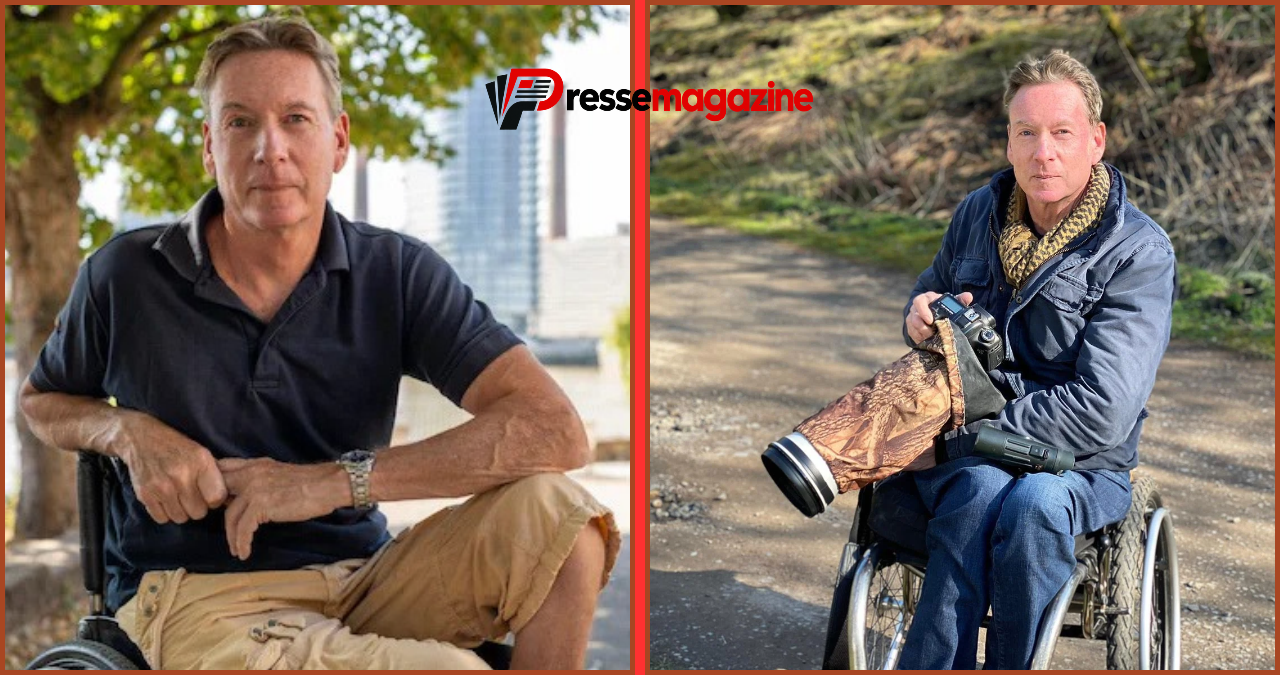
Who Is Frank Gardner?
Frank Gardner is a British journalist, author and broadcaster best known for his long career as the BBC’s Security Correspondent. His specialist reporting has focused on terrorism, international security, the Middle East and geopolitical affairs. Before becoming a familiar face on British television, Gardner worked in investment banking and developed extensive knowledge of the Middle East. He later moved into journalism, where his Arabic language skills, regional experience and understanding of international affairs helped him build a distinctive career covering some of the world’s most complex security stories.
Frank Gardner’s professional life changed dramatically in June 2004 when he was attacked while working as a journalist in Riyadh, Saudi Arabia. He was shot six times during the incident, while his colleague and cameraman Simon Cumbers was killed. Gardner survived but suffered serious injuries that left him partially paralysed in his legs. Following numerous operations and a lengthy rehabilitation, he returned to BBC journalism in 2005. His subsequent career has included television reporting, radio appearances, documentaries, public speaking and authorship.
Frank Gardner’s Early Life and Education
Frank Gardner was born in 1961 and developed an interest in the Middle East during his younger years. His fascination with the region eventually influenced both his education and professional direction. He studied Arabic and Islamic Studies, gaining language and cultural knowledge that later became particularly valuable during his career. Rather than entering journalism straight after his studies, Gardner initially followed a different professional route. His early experience in business and finance would eventually complement his knowledge of international affairs and provide a useful foundation for his later reporting work.
Gardner spent several years working in investment banking before deciding to pursue journalism. His professional experience included work with financial institutions connected to the Middle East, giving him valuable insight into international markets and the region’s business environment. In 1995, he moved into broadcasting with BBC World TV. This career change marked the beginning of a new professional chapter, eventually taking him from financial services into international reporting, where his knowledge of Arabic and Middle Eastern affairs became increasingly important.
Frank Gardner’s BBC Career
Frank Gardner gradually established himself as a specialist journalist covering the Middle East and international security. In 1997, he moved to Dubai and worked as a freelance Gulf correspondent, reporting from countries across the region. His career then developed further when he became the BBC’s Middle East correspondent based in Cairo in 1999. The role required extensive travel and reporting on political developments, regional conflicts and international affairs, giving Gardner first-hand experience of many of the issues that later became central to his work as a security journalist.
Gardner eventually became the BBC’s Security Correspondent, a position that placed him at the centre of major stories involving terrorism, national security and international threats. His role has involved explaining complicated developments to a broad British audience, often providing historical and regional context alongside breaking news. Gardner has appeared across BBC television and radio programmes and has contributed to documentaries and specialist reports. His experience covering the Middle East has remained an important part of his professional perspective.
What Happened to Frank Gardner in 2004?
One of the most significant events in Frank Gardner’s life occurred on 6 June 2004 in Riyadh, Saudi Arabia. Gardner and Irish cameraman Simon Cumbers were working on a journalistic assignment when they were attacked by gunmen. Gardner was shot six times and seriously injured, while Cumbers was killed. The attack occurred during a period of heightened concern about extremist violence in Saudi Arabia, where foreign nationals and journalists faced significant security risks.
The injuries Gardner suffered had permanent consequences for his mobility. One of the bullets damaged nerves around his spine, leaving him partially paralysed in his legs. He underwent numerous operations and spent around seven months in hospital before continuing his recovery through rehabilitation. Despite the seriousness of his injuries, Gardner returned to BBC reporting in 2005. His return meant adapting to new physical circumstances while continuing the demanding work of an international security journalist.
Frank Gardner’s Return to Journalism
Frank Gardner’s return to journalism became an important part of his professional story. After extensive medical treatment and rehabilitation, he resumed his work for the BBC and continued reporting on international security. His use of a wheelchair became a visible part of his public identity, but his journalism remained focused on the subjects that had defined his career. He continued to analyse terrorism, conflicts, political developments and security threats for audiences across the United Kingdom and beyond.
Gardner has also continued to undertake work beyond traditional studio journalism. His career has included documentaries, radio appearances, written journalism and public speaking. He has travelled for professional assignments and continued to report on regions connected with his specialist interests. Rather than allowing his injuries to end his broadcasting career, Gardner adapted his working methods and remained active within the media industry. His post-2004 career therefore represents a significant continuation of the professional path he had established before the attack.
Frank Gardner and Saudi Arabia
Saudi Arabia has played an important role in Frank Gardner’s professional and personal story. His knowledge of the country and the wider Gulf region developed through years of work and travel. His reporting experience meant that he could provide audiences with context about Saudi politics, society, security and regional affairs. The country also became closely associated with the 2004 attack that dramatically altered his life and resulted in the death of his colleague Simon Cumbers.
Years after the shooting, Gardner returned to Saudi Arabia for a BBC documentary project. The return allowed him to revisit aspects of the country while reflecting on the events that had taken place there. His reporting did not simply focus on his own experience, but also examined developments in Saudi Arabia and the wider region. This combination of personal history and professional journalism became another notable element of Gardner’s broadcasting career.
Frank Gardner’s Books
Frank Gardner has also built a reputation as an author. His best-known book, Blood and Sand: Life, Death and Survival in an Age of Global Terror, was published in 2007. The book explores his experiences as a journalist and provides insight into the 2004 attack, his subsequent medical treatment and his eventual return to professional life. It also reflects on the broader subject of terrorism and the changing international security environment in which Gardner worked.
Gardner’s writing complements his television career because both forms of work allow him to examine complicated international subjects in greater detail. His professional interests include terrorism, security, the Middle East and geopolitical affairs. Through his books and journalism, he has been able to draw upon decades of experience reporting from different parts of the world. His writing also provides readers with a deeper understanding of the professional challenges faced by journalists covering international security.
Frank Gardner’s Personal Life
Although Frank Gardner is a well-known public figure through his BBC work, he has generally maintained a degree of privacy around his personal life. His career has involved extensive international travel, particularly during the years when he worked as a Gulf and Middle East correspondent. In 1997, Gardner moved to Dubai with his pregnant wife while beginning his work as a freelance correspondent. His professional responsibilities therefore developed alongside major changes in his family and personal circumstances.
Gardner’s public profile has primarily been shaped by his journalism rather than detailed discussion of his private relationships. He has spent decades working in areas where international events can change quickly, meaning that his professional life has often demanded travel, preparation and close attention to security issues. While some aspects of his personal background are publicly documented, he has generally kept the focus of his public career on journalism, books, international affairs and security reporting.
Frank Gardner’s Work as a Security Correspondent
As a security journalist, Frank Gardner has covered subjects that often require detailed understanding of international politics and regional history. His reporting has included terrorism, conflicts, intelligence-related developments and threats to national security. Such subjects can be complicated for general audiences, particularly when events involve several countries or long-running disputes. Gardner’s role has therefore involved explaining the wider context behind major developments while reporting on the immediate facts of a story.
His specialist background has helped make him a recognisable voice on BBC coverage of international security. Gardner’s experience in the Middle East is particularly relevant when discussing developments across the Gulf and surrounding regions. His reporting career has also allowed him to cover events beyond the Middle East, including conflicts and security issues elsewhere. Over time, his work has demonstrated how specialist journalism can combine first-hand reporting, historical knowledge and analysis for a broad television and radio audience.
Frank Gardner’s Career After His Injury
The years following the 2004 shooting have been an important period in Frank Gardner’s professional development. Rather than stepping away permanently from journalism, he returned to work and continued building his career. His experience also gave him a personal understanding of the consequences that violence can have on individuals, although his professional reporting has remained focused on evidence and international developments rather than solely on his own experiences.
Gardner has continued to appear in British media while adapting to the long-term effects of his injuries. His work demonstrates the practical changes that can be required when a journalist returns to a demanding career after a serious physical setback. He has remained involved in reporting, analysis, documentaries and writing. His continued presence in broadcasting has helped maintain his position as one of the BBC’s recognisable specialists on international security and terrorism.
Conclusion
Frank Gardner’s story combines journalism, international affairs, personal adversity and professional determination. His journey from investment banking to BBC journalism gave him a distinctive background, while his extensive experience in the Middle East helped establish him as a specialist security correspondent. The 2004 attack in Saudi Arabia permanently changed his physical circumstances and resulted in the death of his colleague Simon Cumbers, but Gardner eventually returned to broadcasting after a long period of treatment and rehabilitation.
Today, Frank Gardner remains closely associated with specialist reporting on terrorism, security and international affairs. His work across television, radio, documentaries and books has allowed him to communicate complex global developments to British audiences. His career also demonstrates how a journalist can adapt professionally after a life-changing event while continuing to develop expertise in a demanding field. From his early work in finance to decades of international journalism, Gardner’s career remains closely connected with the changing security landscape of the modern world.
FAQs
What is Frank Gardner famous for?
Frank Gardner is best known for his work as the BBC’s Security Correspondent. He has spent many years reporting on terrorism, international security, the Middle East and geopolitical affairs. He is also recognised because of the 2004 attack in Saudi Arabia, in which he was seriously injured and his cameraman Simon Cumbers was killed.
What happened to Frank Gardner?
Frank Gardner was shot six times during an attack in Riyadh, Saudi Arabia, on 6 June 2004. He survived but suffered serious injuries that resulted in partial paralysis of his legs. After undergoing numerous operations and an extended period of rehabilitation, he returned to BBC journalism in 2005 and continued working as a security specialist.
Why does Frank Gardner use a wheelchair?
Frank Gardner uses a wheelchair because of injuries sustained during the 2004 shooting in Saudi Arabia. The attack caused serious damage affecting the nerves around his spine and left him partially paralysed in his legs. Following extensive medical treatment and rehabilitation, he returned to professional journalism while continuing to use a wheelchair.
Has Frank Gardner written a book?
Yes. Frank Gardner wrote Blood and Sand: Life, Death and Survival in an Age of Global Terror, which was published in 2007. The book explores his career, the 2004 attack, his recovery and his experiences working in a world increasingly shaped by international terrorism and security concerns.
Is Frank Gardner still associated with the BBC?
Frank Gardner has had a long-standing career with the BBC and is widely recognised for his work as its Security Correspondent. His broadcasting career has included television and radio appearances, specialist reporting and documentaries. He has continued to provide expertise on international security, terrorism and geopolitical developments.
You may also read
griffin musk








One Comment